---
title: Minimalist Furniture Design Explained | Principles, Materials and Interior Impact
description: Learn what minimalist furniture design really means, from its core principles and materials to how it shapes calm, functional interiors.
image: https://blog.innerspacewa.com.au/hubfs/Kora-attendantmorroco-web-scaled.jpg
---
[](https://www.innerspacewa.com.au/)
- [Ready to Ship](https://www.innerspacewa.com.au/leadtime/ready-to-ship/)
- [About](https://www.innerspacewa.com.au/about/)
- [Services](https://www.innerspacewa.com.au/services/)
- [Projects](https://www.innerspacewa.com.au/projects/)
- [Shop by Brand](https://www.innerspacewa.com.au/brands/)
- [Shop by Designer](https://www.innerspacewa.com.au/designers/)
- [Contact](https://www.innerspacewa.com.au/contact-us/)
- [Ready to Ship](https://www.innerspacewa.com.au/leadtime/ready-to-ship/)
- [About](https://www.innerspacewa.com.au/about/)
- [Services](https://www.innerspacewa.com.au/services/)
- [Projects](https://www.innerspacewa.com.au/projects/)
- [Shop by Brand](https://www.innerspacewa.com.au/brands/)
- [Shop by Designer](https://www.innerspacewa.com.au/designers/)
- [Contact](https://www.innerspacewa.com.au/contact-us/)
# Minimalist Furniture Design Explained | Principles, Materials and Interior Impact
### 25 June 2026
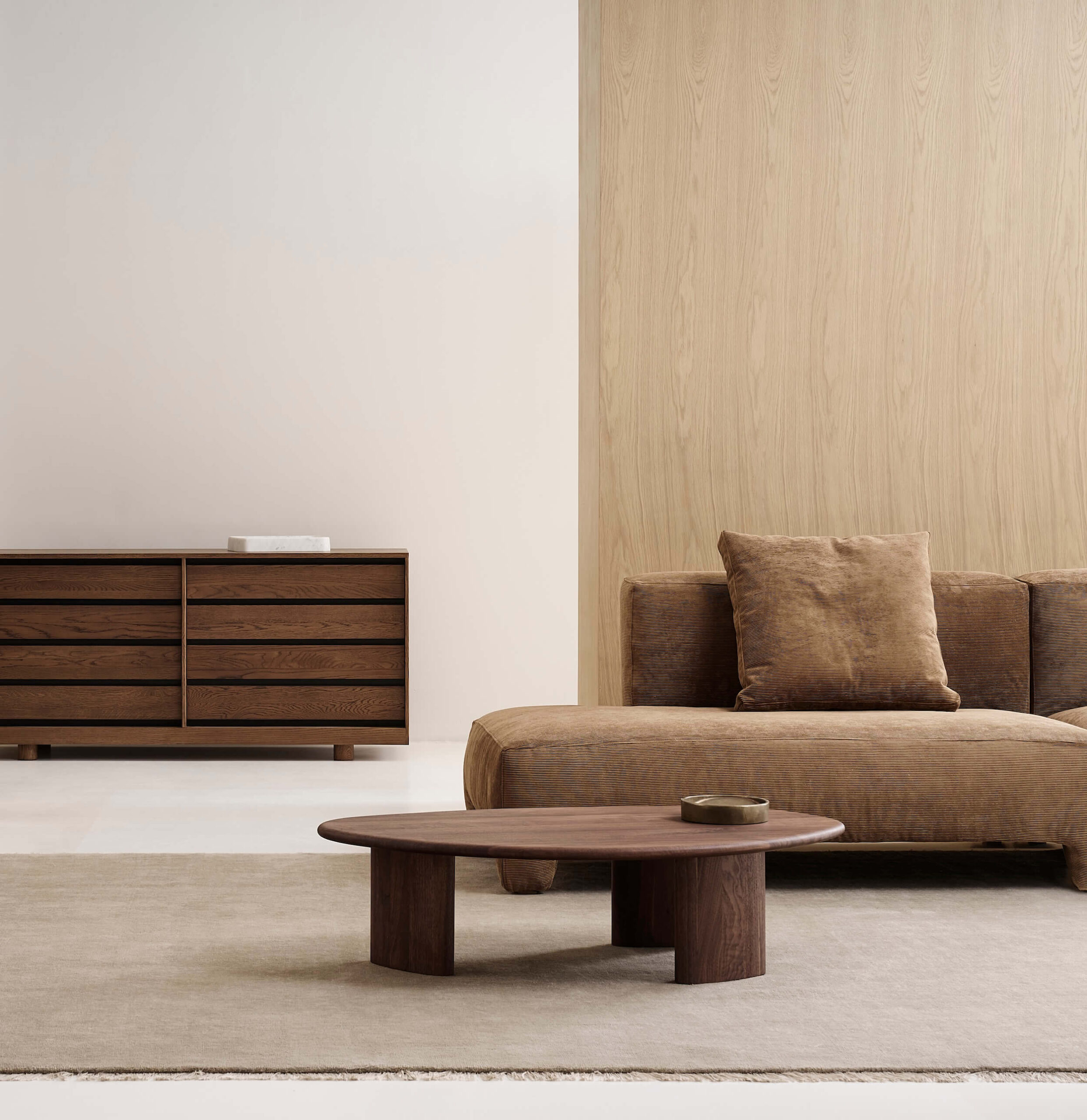
Minimalist furniture design is often misunderstood as simply removing decoration or owning fewer things. In reality, it is a design philosophy grounded in restraint and intention. Rather than filling a room with visual noise, minimalist furniture focuses on proportion, material quality and purpose.
The result is balance. Each piece exists because it contributes to how a space functions and feels. In well designed interiors, minimalist furniture helps
create calm environments that allow architecture, light and materials to take centre stage.
[](https://www.innerspacewa.com.au/products/horizon-modular-sofa-by-frigerio/)
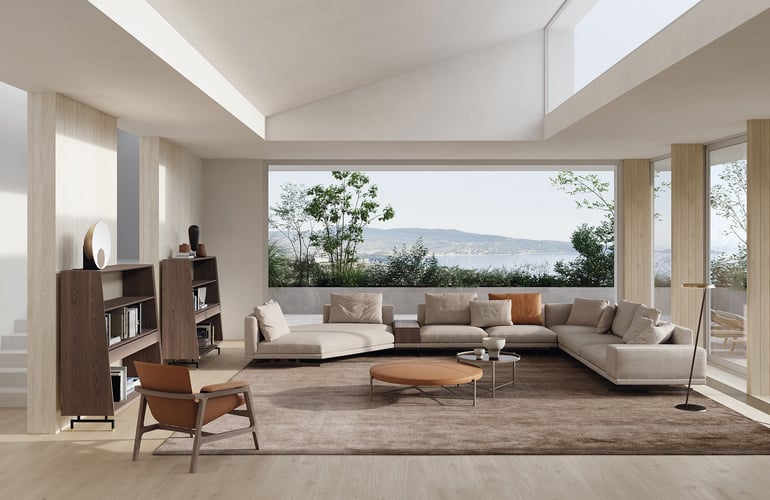
[Horizon Modular Sofa by Frigerio](https://www.innerspacewa.com.au/products/horizon-modular-sofa-by-frigerio/)
**What minimalist furniture design means**
At its core, minimalist furniture design prioritises clarity of form and thoughtful construction. Shapes tend to be simple and refined, with unnecessary
details removed so the structure and materials speak for themselves.
This approach places greater importance on proportion and craftsmanship. When visual complexity is reduced, everything becomes more noticeable.
Designers must carefully consider how a piece sits within a space, how it is used and how it interacts with surrounding elements.
Minimalist furniture is also highly functional. Pieces are designed to perform their role well without distraction, creating purposeful interiors.
## **The principles behind minimalist furniture**
Several guiding principles shape minimalist furniture design.
Reduction is the most obvious. Designers remove excess elements until only what is essential remains. This does not mean sacrificing comfort or usability,
but refining the design so every part has a clear role.
Balance is another key principle. Minimalist interiors rely on harmony between furniture, space and architecture. The scale of each piece matters, as does
how it relates to walls, light and circulation within the room.
Functionality is equally important. Minimalist furniture is designed to support everyday living by working effortlessly while maintaining visual clarity.
Together, these principles create furniture that feels quiet but intentional.
## **Materials and finishes in minimalist design**
Material selection plays a significant role in minimalist furniture. When decorative detail is reduced, the natural qualities of materials become more prominent.
Timber, stone, leather and metal are often used for their durability and tactile qualities. Rather than masking surfaces with heavy finishes, designers tend to highlight grain, texture and natural colour variations. Brands like Natadora demonstrate how carefully selected materials and refined construction can elevate simple forms.
Quality finishes are equally important. Subtle details such as edge profiles, joinery and surface treatments contribute to the longevity and visual warmth of minimalist interiors. These details ensure that simple forms still feel refined and considered.
[](https://www.innerspacewa.com.au/products/kora-table-by-natadora/)
[*Kora Table by Natadora*](https://www.innerspacewa.com.au/products/kora-table-by-natadora/)
## **The role of craftsmanship**
Craftsmanship becomes particularly important in minimalist furniture design. With fewer visual distractions, construction quality is immediately visible.
Well-balanced proportions and careful material handling allow furniture to maintain its elegance over time. Poorly made minimalist furniture quickly reveals its flaws, while well-crafted pieces often feel timeless.
This is why many minimalist furniture brands prioritise manufacturing methods that combine traditional craftsmanship with contemporary production techniques.
## **Minimalism across different design cultures**
While minimalist design is often associated with Scandinavian interiors, its influence can be seen across many cultures.
Scandinavian design emphasises light, natural materials and warmth. Furniture tends to feature soft timber tones, gentle curves and a strong connection to nature.
Japanese design traditions have also shaped modern minimalism. Concepts such as balance, negative space and simplicity are central to Japanese interiors, where furniture often sits lower and integrates closely with architecture.
Across Europe and Australia, contemporary minimalist furniture often blends these influences with modern materials and architectural contexts. Collections from brands such as [Sketch](https://innerspacewa.com.au/brand/sketch/) and [Frigerio](https://innerspacewa.com.au/brand/frigerio/) reflect how minimalist principles can be interpreted through refined materials and contemporary craftsmanship.
## **How minimalist furniture shapes interiors**
Minimalist furniture has a powerful impact on how interiors are experienced. By reducing visual clutter, it allows rooms to feel more open and intentional.
Circulation becomes clearer, natural light travels more freely and architectural elements gain greater presence. The space itself becomes part of the design rather than simply a container for furniture.
When chosen carefully, minimalist furniture can also create a sense of calm that supports everyday living. Interiors feel balanced, functional and quietly sophisticated.
For designers and homeowners alike, minimalist furniture is less about owning fewer pieces and more about choosing better ones. Thoughtfully designed furniture helps shape interiors that are enduring, practical and visually harmonious.
[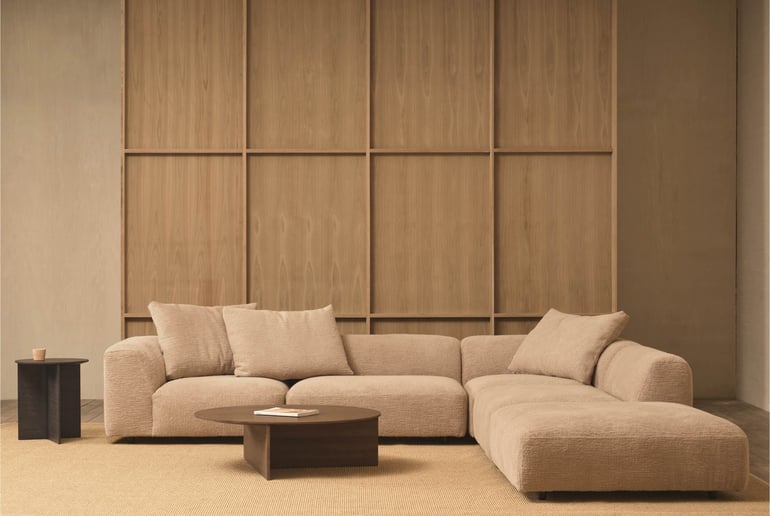](https://www.innerspacewa.com.au/products/peal-modular-sofa-by-tolv/)[Peal Modular Sofa by Tolv](https://www.innerspacewa.com.au/products/peal-modular-sofa-by-tolv/)
### Share this article:
[‹ Return to Blog](https://blog.innerspacewa.com.au/)
[](https://www.innerspacewa.com.au/)
**Sydney showroom**
2 Boundary Street
Paddington NSW 2021
[View map](https://www.google.com/maps/place/Level+1%2F2+Boundary+St,+Paddington+NSW+2021/@-33.8791563,151.2252871,17z/data=!3m1!4b1!4m6!3m5!1s0x6b12ae0eb275579f:0x1df7e79258a36ac9!8m2!3d-33.8791563!4d151.2274758!16s%2Fg%2F11qpklrhbd?entry=ttu)
Ph: [+61 2 8072 9340](tel:+61%202%208072%209340)
Mon – Fri: 9am – 5pm
(ex public holidays)
Saturday: 10am – 2pm
[Contact Us](https://hello.innerspacewa.com.au/contact-us)
**Melbourne showroom**
17 Bedford Street
Collingwood VIC 3066
[View map](https://www.google.com/maps/place/17+Bedford+St,+Collingwood+VIC+3066,+Australia/@-37.800252,144.984686,16z/data=!4m6!3m5!1s0x6ad6431fc1c37575:0x50df3893157c3504!8m2!3d-37.8002519!4d144.9846861!16s%2Fg%2F11cs7kprz5?hl=en&entry=ttu)
Ph [+61 3 7002 8810](tel:+61370028810)
By Appointment Only
[Contact Us](https://hello.innerspacewa.com.au/contact-us)
**Perth showroom**
509 Murray Street
Perth WA 6000
[View map](https://goo.gl/maps/wAjCwcqcnWkxAEJV7)
Ph [+61 8 9322 6664](tel:+61893226664)
Mon – Fri: 9am – 5pm
(ex public holidays)
Saturday: 10am – 4pm
[Contact Us](https://hello.innerspacewa.com.au/contact-us)
**Subscribe to our newsletter**
© 2026 Innerspace Commercial Interiors
**[FAQs](https://hello.innerspacewa.com.au/frequently-asked-questions)**
**For Home**
- [Living](https://www.innerspacewa.com.au/collections/living/)
- [Dining](https://www.innerspacewa.com.au/collections/dining/)
- [Bedroom](https://www.innerspacewa.com.au/collections/bedroom/)
- [Home Office](https://www.innerspacewa.com.au/collections/designer-home-office-furniture/)
- [Outdoor](https://www.innerspacewa.com.au/collections/outdoor/)
- [Lighting](https://www.innerspacewa.com.au/collections/designer-lighting/)
- [Homewares](https://www.innerspacewa.com.au/collections/homewares/)
**For Business**
- [Workplace](https://www.innerspacewa.com.au/collections/workplace/)
- [Healthcare and Aged Care](https://www.innerspacewa.com.au/collections/healthcare-aged-care/)
- [Education](https://www.innerspacewa.com.au/collections/education/)
- [Hospitality](https://www.innerspacewa.com.au/collections/hospitality/)
- [CUA](https://www.innerspacewa.com.au/cua/)
- [Clocks](https://www.innerspacewa.com.au/collections/clocks/)
- [Rugs](https://www.innerspacewa.com.au/collections/rugs/)
- [Decorative](https://www.innerspacewa.com.au/collections/decorative/)
- [Terms and Conditions](https://www.innerspacewa.com.au/terms-and-conditions/)
- [Delivery Policy](https://www.innerspacewa.com.au/delivery/)
- [Returns Policy](https://www.innerspacewa.com.au/returns-policy/)
- [Warranty](https://hello.innerspacewa.com.au/warranty)
- [Privacy Policy](https://www.innerspacewa.com.au/privacy-policy/)
- [Care and Maintenance](https://blog.innerspacewa.com.au/hubfs/Innerspace%20Care%20%26%20Maintenance%20Manual%20OCT2023%20.pdf)
- [FAQs](https://hello.innerspacewa.com.au/frequently-asked-questions)