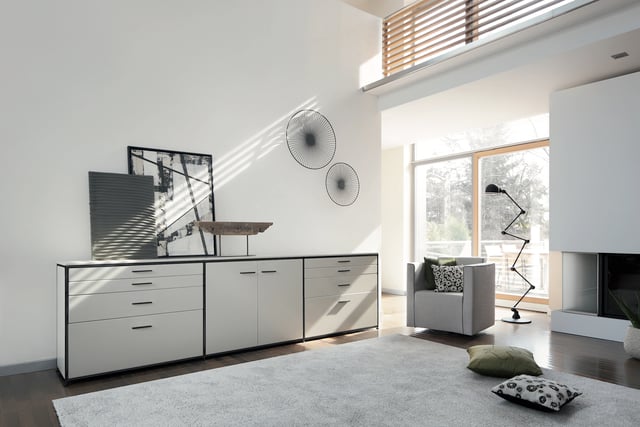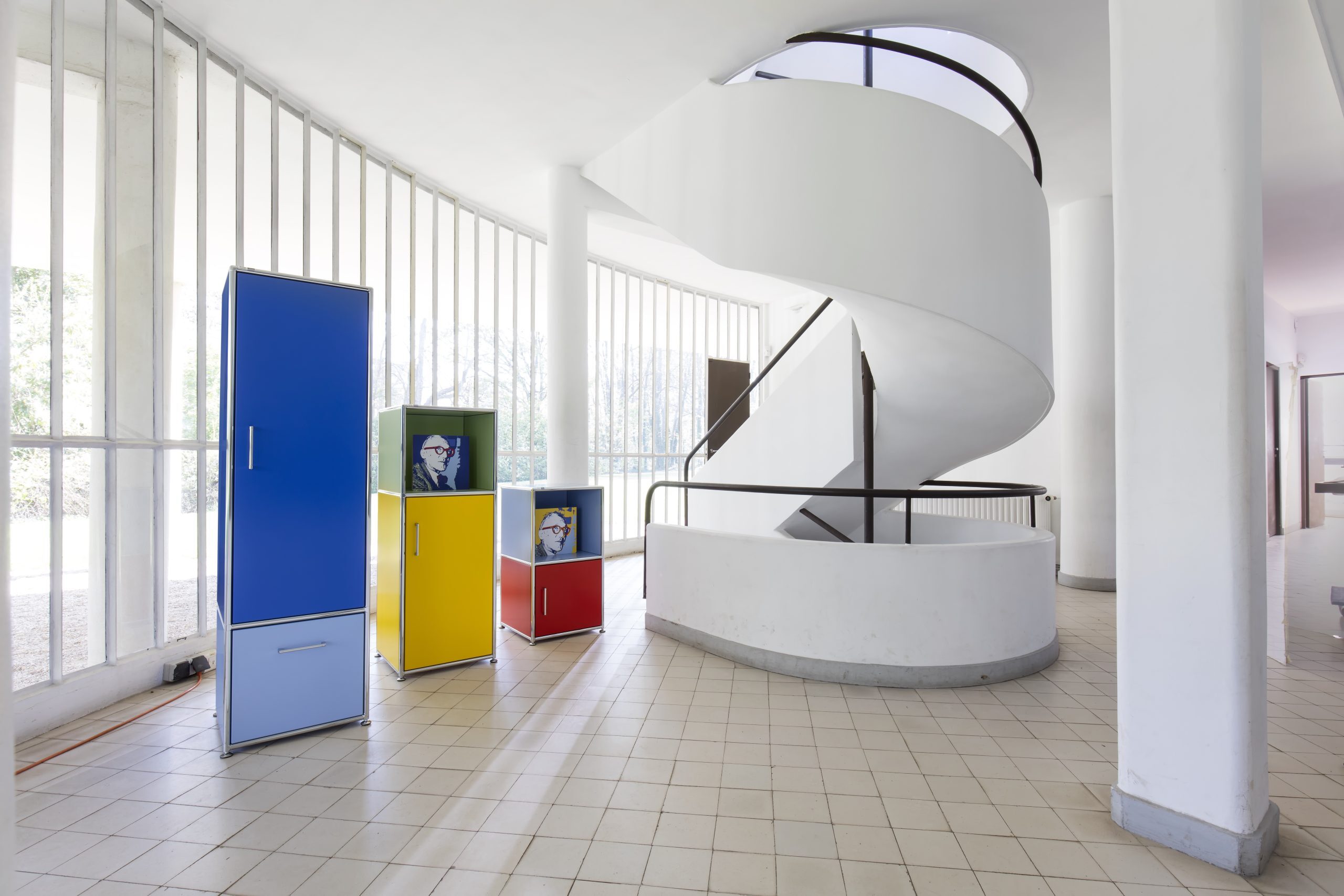
Recently featured in Australian Design Review. in an article by Madeleine Swain, Modul Space by Bosse sits within a broader conversation about how adaptable systems are shaping contemporary spaces.
At Innerspace, it also made us think about flexibility in a more practical way. Not just as an idea, but how it actually shows up in spaces that are used every day.
Modul Space is built on a simple principle: ‘One idea: 1000 possibilities’.
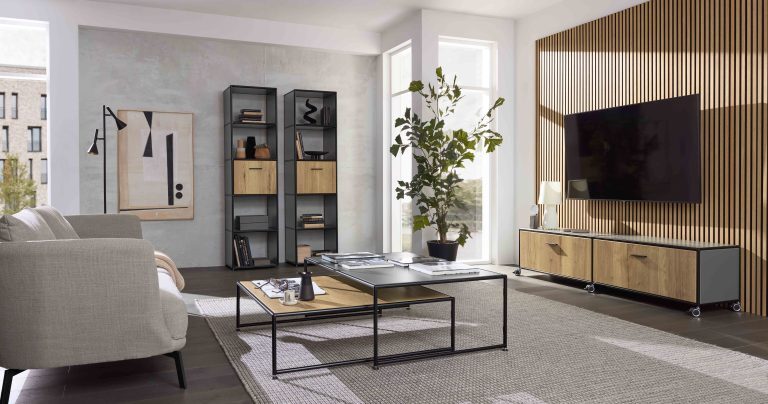
Rather than a fixed piece of furniture, it functions as a structured framework made up of frames, connectors and panels. The logic sits in its construction, where each element is designed to work together, and to be adjusted or extended as required. In this way, the system is not defined by a single outcome, but by its ability to shift between them.
In workplaces, hospitality settings and residential environments, this kind of adaptability is becoming more relevant. Spaces are no longer static and they are often expected to perform in multiple ways across their lifespan.
A clear system at its core
Manufactured in Germany and informed by Bauhaus principles, Modul Space is underpinned by a clear engineering logic.
Its tubular steel structure references early modular furniture systems developed by Poul Cadovius in the 1960s, where furniture began to move away from fixed form and instead operate in closer relationship with architecture and space.
That thinking continues here. The system is precise in its construction, with each component designed to connect cleanly and perform consistently, supporting configurations that can be changed without losing coherence.
There is also a quiet emphasis on longevity - not only in how the system is built, but in how it is intended to be used over time.
Built to adjust, not to replace
One of the defining qualities of modular systems is how they hold up over time.
With Modul Space, elements can be added, moved or reconfigured rather than replaced. It allows spaces to evolve without starting from scratch each time needs change.
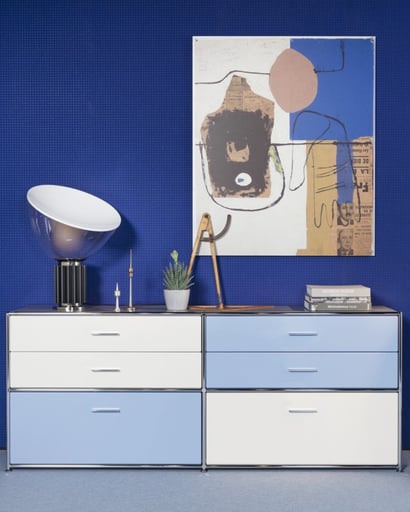
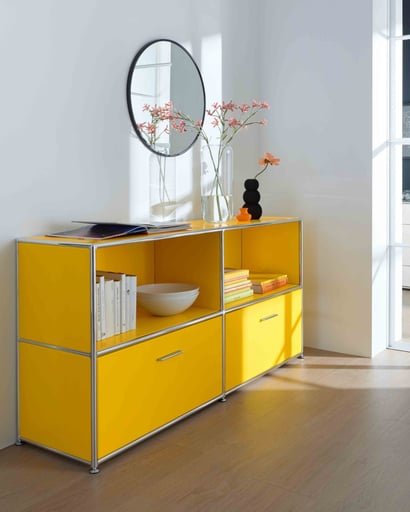
Modul Space Sideboard by Bosse
This idea of adaptability is not separate from longevity, it is part of it. The ability to rework what already exists reduces waste, but it also extends the usefulness of a system well beyond its initial configuration.
This creates a more circular logic within the design itself, one that values continuation over replacement rather than constant renewal.
In this sense, flexibility is not a feature. It is a way the system continues to operate.
Materiality and composition
Alongside its structural clarity, Modul Space is defined by a restrained and considered material palette.
Chrome or matte black powder-coated frames are paired with timber, glass and acoustic panels, allowing the system to move between functional, spatial and more refined applications without losing consistency.
A curated colour selection, including tones from Le Corbusier’s Les Couleurs palette, adds depth and reference without overwhelming the system’s simplicity.
These material choices also support performance, including acoustic applications where required, allowing the system to respond not just visually, but environmentally within a space.
Across different contexts
Modul Space moves easily between environments.
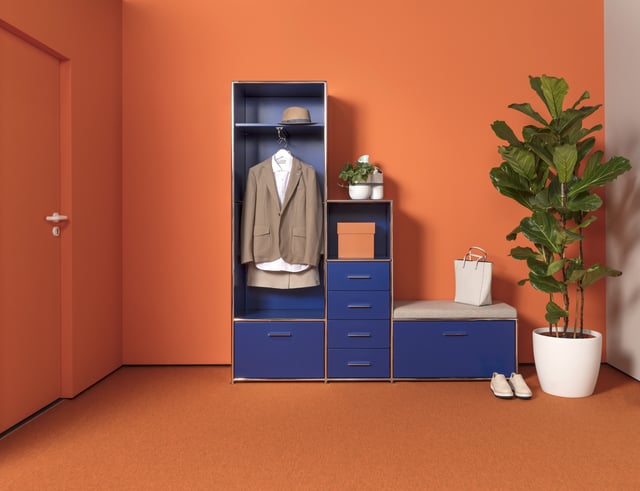
It can be used for workplace storage and shelving, room dividers, counters and display systems. In hospitality settings, it helps define space without closing it down. In residential applications, it extends into wardrobes, buffets and integrated storage solutions.
Across each of these, the same system is present - simply configured in different ways to suit the space.
That consistency is part of what allows it to remain adaptable over time.
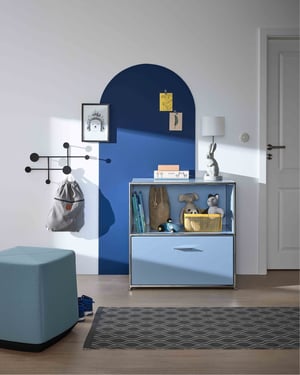
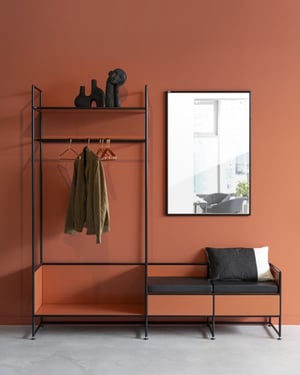
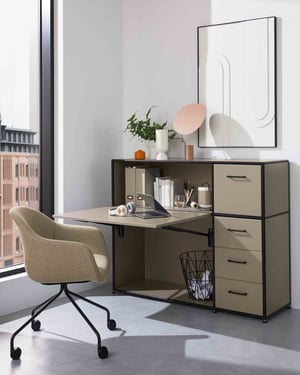
Modul Space Highboard by Bosse Modul Space Wardrobe by Bosse Modul Space Study Desk by Bosse
A framework that continues to evolve
Modular design is most relevant when considered over time.
Modul Space is not designed around a single moment or fixed outcome. It is intended to be built, adjusted and reworked as required, allowing spaces to evolve without needing to start again each time something changes.
There is also something quietly fundamental in this approach - a recognition that spaces are not finished when they are first delivered, but continue to develop as they are used.
Looking ahead
As expectations around space continue to shift, systems that can adapt without losing coherence will become increasingly important.
Modul Space demonstrates how modularity can support this in a practical way - through structured design, material restraint and the ability to evolve over time.
For us at Innerspace, it reinforces a simple idea. The most enduring systems are the ones that continue to work quietly in the background, long after the first version of a space has changed.
Read the full article in Australian Design Review.